Geography
Understanding places, people and environments
Geography develops pupils’ knowledge of the world and their place within it. Children investigate locations, environments and human activity from their local area to the wider world.
Geography Curriculum
At All Saints’, our geography curriculum enables pupils to develop a secure and connected understanding of the world and the places within it. Through local, national and global geography, pupils develop an understanding of where places are, how they are connected, how they change and how people interact with their environments.
Our curriculum progressively develops substantive and disciplinary knowledge. Learning is carefully sequenced so that pupils build on, revisit and connect prior knowledge, developing increasingly secure understanding of places, physical and human processes and geographical patterns.
The curriculum follows the National Curriculum and is organised around three key concepts: locate, navigate and explore. These are represented through Knowledge Gems, which identify the essential knowledge, vocabulary and concepts pupils need to remember. Retrieval activities support pupils to retain and connect their learning.
What pupils develop
Pupils learn to use maps, atlases, data and fieldwork techniques. They explore physical and human processes, consider environmental change and communicate geographical findings clearly.
Teaching and Learning
Geography is taught through carefully sequenced units, with teachers explicitly teaching key knowledge, vocabulary, concepts and skills. Modelling, questioning, explanation and guided practice support secure understanding.
Pupils develop geographical enquiry skills, learning to ask questions, interpret maps and data, identify patterns, compare places and understand how physical and human processes shape the world. They learn to locate places and features, navigate using maps and geographical information, and explore places, processes and relationships.
Red and Green Dot Tasks, retrieval and assessment activities help teachers identify prior knowledge, misconceptions and gaps, enabling teaching to respond appropriately.
Progression across the school
Learning moves from familiar places towards increasingly complex regional and global comparisons, building secure vocabulary and spatial understanding.
Progression and Inclusion
The Geography Learning Journey and progression documents ensure that learning builds systematically on prior knowledge. Pupils access the same ambitious curriculum through explicit vocabulary teaching, modelling, scaffolding and appropriate challenge.
By the end of each key stage, pupils should be able to remember, explain, connect and apply important geographical knowledge and use appropriate vocabulary, maps, data and evidence to communicate their understanding.
Enrichment and Impact
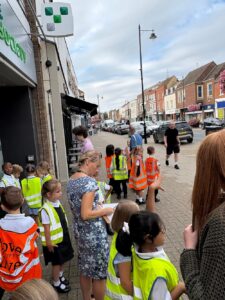
Fieldwork, local studies, visits and practical investigations are used where they enhance and deepen geographical learning. Maps, atlases, globes, data and digital technologies provide opportunities for pupils to apply their geographical knowledge and skills.
The impact of our curriculum is seen when pupils can retain knowledge, make connections, use geographical vocabulary accurately, interpret maps and data, explain patterns and apply their understanding to new contexts.
Ultimately, we want every child to leave All Saints’ with a strong sense of place, a rich body of geographical knowledge and the ability to think geographically about the world around them. They will be confident to locate, navigate and explore the world and understand the connections between people, places and environments.