History
Understanding people, events and change
History helps pupils understand how people and societies have changed over time. Children explore significant events, individuals and periods while learning how our knowledge of the past is constructed.
History Curriculum
At All Saints’, our history curriculum enables pupils to develop a secure and connected understanding of the past and recognise how people, events, ideas and cultures have shaped the world today. Through local, national and world history, pupils develop an understanding of who we are, where we have come from and how the past influences the present, while appreciating their own heritage and the experiences and cultures of others.
Our curriculum progressively develops substantive and disciplinary knowledge. Children develop a secure chronological understanding, beginning with their own personal history in EYFS and progressing through significant periods, people and civilisations. Learning is carefully sequenced so that pupils build on, revisit and connect prior knowledge rather than learning topics in isolation.
The curriculum follows the National Curriculum and is organised around three key concepts: chronology, people and legacy. These provide consistent threads across the curriculum and are represented through Knowledge Gems, which identify the essential knowledge and vocabulary pupils need to remember. Key knowledge is regularly revisited through retrieval activities to support long-term learning.
Teaching and Learning
History is taught through carefully sequenced units, with teachers explicitly teaching key knowledge, vocabulary and historical concepts. Modelling, questioning, explanation and guided practice support pupils to develop secure understanding, while retrieval activities help pupils recall and connect previously learned knowledge.
Pupils develop the skills of historical enquiry, learning to ask questions, use evidence, identify similarities and differences, explore cause and consequence, and understand change and continuity. As they progress, pupils become increasingly confident in using evidence to explain and communicate their historical understanding.
What pupils develop
Enrichment and Impact
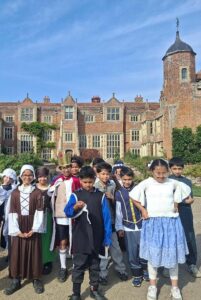
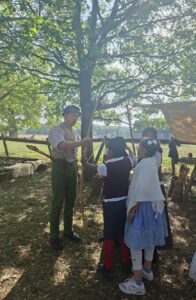
Visits, visitors, artefacts, themed days and practical experiences are used where they enhance and deepen historical learning. Cross-curricular opportunities support pupils’ reading, writing and vocabulary where they strengthen subject understanding.
The impact of our curriculum is seen when pupils can retain important knowledge, make connections across periods, use historical vocabulary, explain their thinking and use evidence to support their conclusions.
Ultimately, we want every child to leave All Saints’ with a strong chronological understanding, a rich body of historical knowledge and the ability to think critically about the past. They will understand how the past has shaped the present and appreciate the diverse people, cultures and experiences that have contributed to the world in which we live.
History helps pupils understand how people and societies have changed over time. Children explore significant events, individuals and periods while learning how our knowledge of the past is constructed.
Progression across the school
Topics are sequenced to build chronological understanding and help pupils make connections between local, British and wider world history.
Progression and Inclusion
Progression documents and the History Learning Journey ensure that teachers identify prior and future learning and build knowledge systematically. Pupils are supported to access the same ambitious curriculum through explicit vocabulary teaching, modelling, scaffolding and appropriate challenge.
By the end of each key stage, pupils should be able to remember, explain, connect and apply important historical knowledge and use appropriate vocabulary and evidence to communicate their understanding.